
The world of gaming laptops is ushering in a new era defined by impressive specifications and eye-watering prices. With the recent announcement of several powerful models equipped with Nvidia’s latest mobile GPUs, enthusiasts and gamers alike are anxiously awaiting the arrival of these machines. Among the contenders are Razer with their soon-to-be-released Blade 18, Asus with the ROG Strix lineup, and MSI, which is pushing the boundaries with its high-priced Titan 18 HX AI. As gaming technology develops rapidly, what can consumers expect from this latest generation of laptops?
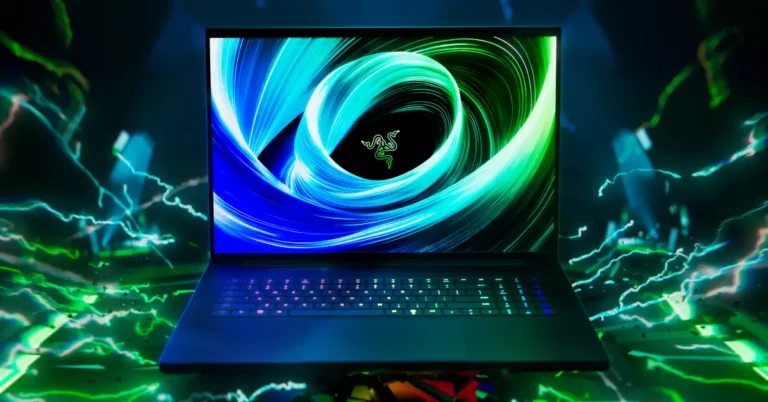
Razer’s Blade 18 is at the forefront of this gaming laptop explosion. This massive device is not just another entry in a crowded market; it boasts an 18-inch display that can handle dual resolutions and refresh rates. Users can opt for a stunning 3840 x 2400 resolution at 240Hz for a crisp visual experience, or dial it down to a more customizable 1920 x 1200 at a jaw-dropping 440Hz. This versatility positions the Blade 18 as an optimal choice for both serious gamers and creators who demand high-performance display capabilities. However, such advanced features come with a steep starting price of $3,199.99 for the RTX 5070 Ti, soaring to $4,499.99 for the top-tier RTX 5090 variant.
This emphasis on display technology highlights a growing trend in the gaming laptop market: a shift from raw GPU power to overall user experience, including visuals and performance. Razer’s commitment to creating not just a device but an immersive gaming environment illustrates this strategic pivot.
Not to be outdone, other manufacturers like Asus and MSI are unveiling their own formidable models. Asus has introduced its flagship ROG Strix Scar 16, cramming cutting-edge features into a sleek design. Starting at $3,299.99 for the RTX 5080, it’s clear that consumers should expect to invest considerably if they want the latest technology. Additionally, the Zephyrus G14 is also making waves with a more approachable starting price of $2,499.99, striking a delicate balance between power and everyday usability. This trend encourages new buyers to consider their specific needs, whether they prioritize portability or raw power.
Meanwhile, MSI raises eyebrows with its Titan 18 HX AI, priced at a staggering $5,999.99. This prodigious cost forces a critical appraisal of what consumers should expect from such an expense. The price tag invites scrutiny: does the Titan 18 HX truly deliver performance that justifies its hefty price, or is it simply a statement piece aimed at the affluent gamer? The market is thus polarized between those seeking top-tier specifications at any cost and more budget-conscious gamers hoping for affordability without sacrifice.
Several patterns emerge from this saturation of high-end gaming laptops. Firstly, the price trends reflect a broader issue within the gaming hardware market. Many users find themselves paying premiums that exceed prior generations; a fact that can deter prospective buyers. The steep pricing partly stems from the demand for innovation in mobile GPUs, a sector still grappling with supply chain issues and high manufacturing costs. As these issues conjoin, the bleed into consumer pricing is evident and raises questions about the sustainability of these trends.
Secondly, there is a strong need for diversification in product offerings. As the gaming laptop market continues to balloon, consumers are left hoping that cheaper GPU alternatives will soon become available. The disparity in pricing suggests that while cutting-edge technology leads the conversation, it simultaneously alienates a segment of the market eager for quality devices without the astronomical costs.
As Nvidia’s new RTX 50-series cards make their way into the market, the gaming laptop landscape is rapidly changing. With manufacturers showcasing revolutionary designs and impressive specifications, the future appears bright yet costly. Consumers searching for the right gaming laptop will have to weigh their options carefully, balancing performance, durability, and price to ensure their investment yields satisfaction. Ultimately, while we welcome the advancements in technology, the challenge moving forward will be making high-end gaming laptops more accessible to a wider range of users.

- BYD’s Lingyuan: A New Era of Vehicle-Integrated Drone Technology - June 23, 2025
- The Rise of Xiaomi: An Overview of the Company’s Latest Innovations - June 23, 2025
- Ikea Enters the Thread Realm: The Timmerflotte Sensor - June 23, 2025
Leave a Reply