
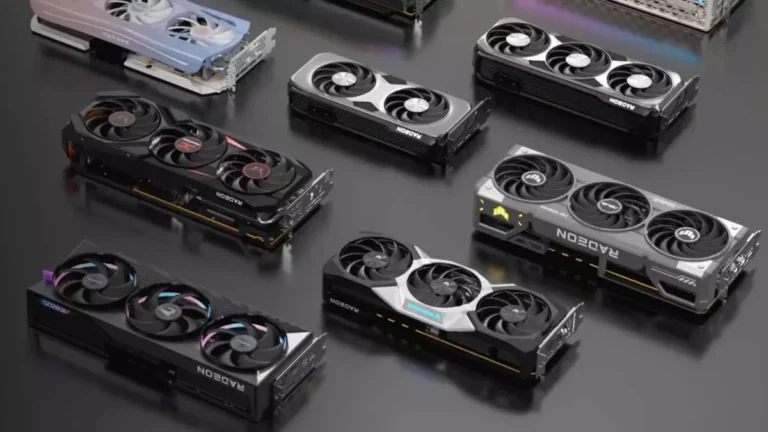
In recent years, the video graphics card market has become a battleground of hyperbole and scarcity, a dynamic that has pushed even the most ardent gamers to the brink of frustration. The relentless selling out of new graphics processing units (GPUs) within mere moments of their release underscores the heightened demand and limited supply in this booming sector. NVIDIA’s RTX 50-series cards have inevitably joined this phenomenon, leading to significant consumer chatter regarding future offerings from AMD, particularly their upcoming RDNA 4 generation.
When AMD took to social media platform X, seeking feedback from gamers about what features they most anticipated for their forthcoming RDNA 4 GPUs, the overwhelming consensus was clear: **availability**. One can argue that this isn’t merely a desire but a demand born from hardship, as avid gamers wrestle with the reality of purchasing high-end rigs only to find that the necessary components remain elusive. The response crystallized in comments such as, “availability would be a brilliant start,” reflecting an anxiety that runs deep among consumers who feel they’ve been left at the mercy of supply chain disruptions and scalping practices.
Moreover, the pricing landscape remains a contentious topic, echoing the frustrations shared on social media. One user’s remark that they don’t want to pay as much for a GPU as their entire gaming setup further highlights this growing sentiment. With high prices often leading to buyer’s remorse, AMD faces the daunting task of striking a balance between competitiveness and profitability, especially when the Radeon RX 9070 and 9070 XT cards launch early in March.
AMD has made significant strides in enhancing their product offerings, but the undercurrents of competition with Nvidia seem to dominate discussions regarding RDNA 4. The introduction of **FSR 4**—AMD’s answer to Nvidia’s DLSS—represents a critical juncture for the company as it seeks to enter the realm of AI-driven upscaling. Yet, just as AMD begins to roll out innovations, Nvidia raises the stakes with advanced features like Multi-Frame Generation (MFG), designed to bolster frame rates significantly.
This cyclical nature of the competition leads many to wonder: will AMD ever truly break free from the cycle of responding to Nvidia’s lead? The latest innovations from their rival, including the transition from convolutional neural networks (CNN) to **transformer models** for upscaling, brings into question whether AMD’s upscaling technology will engage users meaningfully or merely serve as a reactionary tool.
Interestingly, while ray tracing is a buzzword that once captured the industry’s imagination, discussions surrounding AMD’s RDNA 4 reveal a nuanced shift. Users prioritize a combination of availability, raw performance, and effective upscaling over ray tracing capabilities. The focus on tangible performance—as opposed to features that may seem more aspirational than functional—suggests that gamers are becoming more discerning and strategic in their purchasing decisions.
Amidst the marketing jargon surrounding new technologies, AMD and Nvidia have begun to complicate perceptions of performance through often dubious representations. Notably, Nvidia’s recent comparison of the RTX 5070 with the RTX 4090 raises questions about the integrity of such benchmarks. The claim that the new RTX can match the performance of a significantly older model, albeit through the selective use of features like MFG, exposes a threadbare aspect of marketing culture in the tech industry.
This raises pressing questions for AMD as well. If they wish to avoid the pitfalls of over-promising and under-delivering—as many consumers experienced with previous graphics card launches—they must take heed of customer sentiments regarding price points. For AMD, a sweet spot around $500 for the RX 9070 XT, with performance close to the RTX 4080/5080, would likely placate the community and curb immediate backlash.
In the fierce and often tumultuous world of GPU production, AMD stands at a crucial crossroads. With feedback from the community surrounding availability, pricing, and performance being more important than sheer technological horsepower, the company must navigate its strategies wisely to not only break from Nvidia’s shadow but also to ensure sustainable market engagement and consumer trust.
As anticipation builds for the RDNA 4 launch, the focus remains squarely on delivering competitive products without compromising on quality or honesty. In an age where gamers have become incredibly vocal and discerning, the path forward hinges on a balance between innovation and genuine consumer value. The next few months will prove pivotal in determining whether AMD can align consumer expectations with its technological offerings in this demanding market.

- BYD’s Lingyuan: A New Era of Vehicle-Integrated Drone Technology - June 23, 2025
- The Rise of Xiaomi: An Overview of the Company’s Latest Innovations - June 23, 2025
- Ikea Enters the Thread Realm: The Timmerflotte Sensor - June 23, 2025
Leave a Reply