

In a surprising twist last September, Mira Murati, the former chief technology officer at OpenAI, stepped down to pursue her own vision. With the statement, “I want to create the time and space to do my own exploration,” she left many speculating about her next move. The Silicon Valley tech scene buzzed with rumors suggesting that Murati’s departure was a precursor to launching a new venture. Fast forward to today, and the mystery has unraveled—Murati has officially announced her position as the CEO of Thinking Machines Lab, a pioneering public benefit corporation dedicated to advanced artificial intelligence (AI) development.
Thinking Machines Lab aspires to bridge the considerable gap between the rapid evolution of AI technology and the public’s comprehension of it. Murati has keenly observed that even those steeped in scientific acumen often struggle to grasp the nuances of AI, leading to an overall misunderstanding of what the technology can achieve. This disconnect between AI’s capabilities and its perception demands a proactive solution, which Thinking Machines Lab aims to offer. By prioritizing accessibility in its foundational philosophy, the lab plans to demystify AI through public engagement and educational initiatives.
This commitment to transparency will manifest through the lab’s promise to publish technical documentation, research papers, and open-source code. Such an ethos reflects Murati’s conviction that we are merely scratching the surface of what AI can do. Her belief underscores the importance of fostering an environment where information sharing enables collaboration—a vital factor in ensuring that AI technology benefits a broad audience.
Thinking Machines Lab positions itself strategically within a competitive landscape that has recently seen innovations from companies like DeepSeek, which purports to create advanced reasoning models at significantly lower costs than established competitors. This trend reinforces Murati’s insight that new entrants can compete against larger, more entrenched organizations in the AI field. While Murati and her team recognize the advancements of these emerging players, they are set to focus their efforts on high-end large language models, which they believe hold transformative potential for breakthroughs in multiple disciplines.
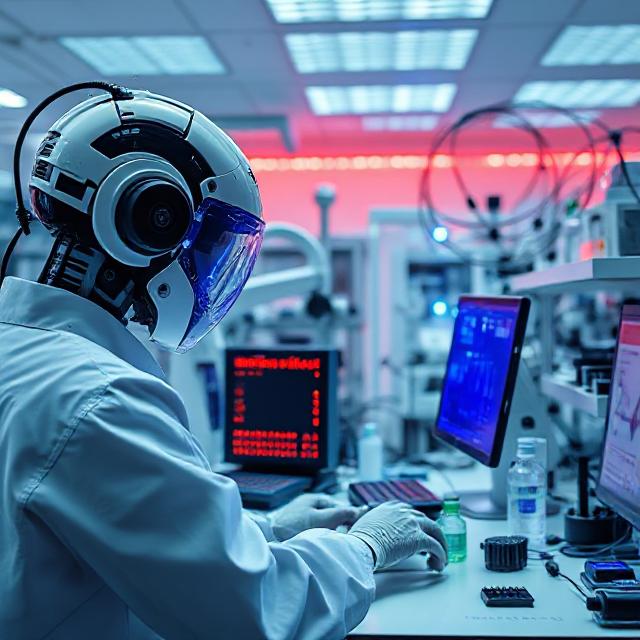
The company’s vision encompasses the idea that the most sophisticated AI models will unlock unprecedented capabilities within scientific and engineering realms, even if it doesn’t explicitly reference the concept of Artificial General Intelligence (AGI). The determination to elevate model capabilities reflects an understanding that scaling these systems involves substantial investment. Although funding details remain tightly under wraps, Murati exudes confidence in securing the requisite capital to fuel this ambitious undertaking.
One of the lab’s most significant strengths lies in the caliber of talent Murati has attracted. With an impressive team of researchers and scientists—many of whom hailing from OpenAI—Murati has combined experience and innovation. Key figures include Barret Zoph, the former VP of research at OpenAI, now serving as the lab’s CTO, and John Schulman, a principal inventor of ChatGPT who has a wealth of experience under his belt. This brain trust from tech giants like Google and competitors such as Mistral AI paints a promising picture for the lab’s future projects.
The team has already settled into its San Francisco office and launched several ambitious projects, though the specifics remain undisclosed. What emerges clearly from their mission, however, is a distinct intention not to replicate existing models such as ChatGPT or Claude. Instead, Thinking Machines Lab endeavors to create AI solutions that optimize human-AI collaboration, an area that Murati identifies as a critical bottleneck within the industry.
This initiative echoes the dreams of American inventor Danny Hillis, who over three decades ago envisioned symbiosis between machines and their human counterparts. Hillis, a protégé of AI pioneer Marvin Minsky, once conceptualized a supercomputer named Thinking Machines, which faced challenges that ultimately led to its bankruptcy in 1994. However, a revival of this name in contemporary context under Murati’s leadership speaks to a reimagined legacy of collaboration and innovation in the field of AI.
Thinking Machines Lab stands at the forefront of a new wave in AI development, led by visionary entrepreneur Mira Murati. By championing accessibility and collaboration, this emerging corporation aims to redefine the parameters of AI technology while building a bridge between its evolving capabilities and the understanding of society at large. This commitment to transparency and inclusivity could very well herald a new era in artificial intelligence, where the fusion of human intellect and advanced algorithms unlocks limitless potential.

- BYD’s Lingyuan: A New Era of Vehicle-Integrated Drone Technology - June 23, 2025
- The Rise of Xiaomi: An Overview of the Company’s Latest Innovations - June 23, 2025
- Ikea Enters the Thread Realm: The Timmerflotte Sensor - June 23, 2025
Leave a Reply