
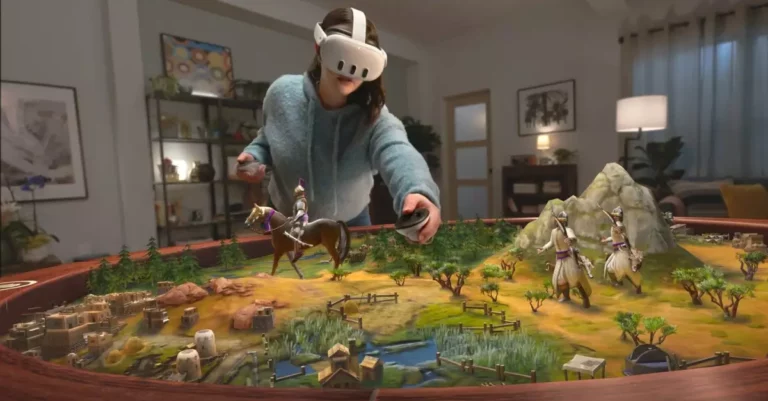
The gaming landscape is constantly evolving, and few franchises exemplify this shift as vividly as Sid Meier’s Civilization. The upcoming release of Civilization VII – VR represents a significant leap forward, translating the beloved strategy game into a virtual reality format. As the gaming world prepares for this exciting addition, it’s crucial to consider how immersive technology can reshape our approach to strategy games.
With the integration of Virtual Reality (VR) elements, Civilization VII seeks to offer players a unique gaming experience that blends physical presence with digital strategy. The game is designed for play on Meta’s Quest 3 platform, promising a “board game-like construction” that can be navigated in both augmented and virtual spaces. This duality not only enhances player immersion but also encourages interaction among participants in a way that traditional gaming formats may not. With passthrough camera technology, players can manipulate their civilizations while remaining aware of their physical surroundings, essentially merging real-life interactions with their virtual conquests.
One of the most exciting aspects of Civilization VII – VR is its multiplayer capabilities. Players will encounter each other in a shared virtual space, embodied by their chosen leaders within the game, whether in the comfort of their homes or an immersive digital landscape. This communal aspect could significantly change the interpersonal dynamics of gameplay, making strategies more intricate as competitors react to one another’s movements in real-time. This social dimension of gaming, enhanced through VR, transforms the way alliances form and strategies evolve in the heat of competition.
Understanding the limitations of prolonged VR sessions, the developers have chosen to fast-track gameplay by default, with options for players to modify the pace. This thoughtful approach recognizes the need for comfort during immersive experiences—an often overlooked factor in VR gaming. By allowing users to tailor their gameplay experience, the developers can maintain player engagement without sacrificing enjoyment or accessibility, appealing to both seasoned strategists and newcomers alike.
As we await the official release of Civilization VII – VR, excitement is building not just for this installment, but for the potential future of VR gaming in general. With the promise of a reimagined approach to one of gaming’s most cherished franchises, it’s clear that developers at 2K and Firaxis Games are brave enough to venture into uncharted territory. Upon its spring debut, gamers will not only be evaluating how closely this new model aligns with traditional Civilization elements but will also be contemplating the broader implications of VR on this genre. In an era defined by digital transformation, Civilization VII – VR could very well set a precedent for the future of strategy games, paving the way for a more interactive and engaging gaming landscape.

- BYD’s Lingyuan: A New Era of Vehicle-Integrated Drone Technology - June 23, 2025
- The Rise of Xiaomi: An Overview of the Company’s Latest Innovations - June 23, 2025
- Ikea Enters the Thread Realm: The Timmerflotte Sensor - June 23, 2025
Leave a Reply