
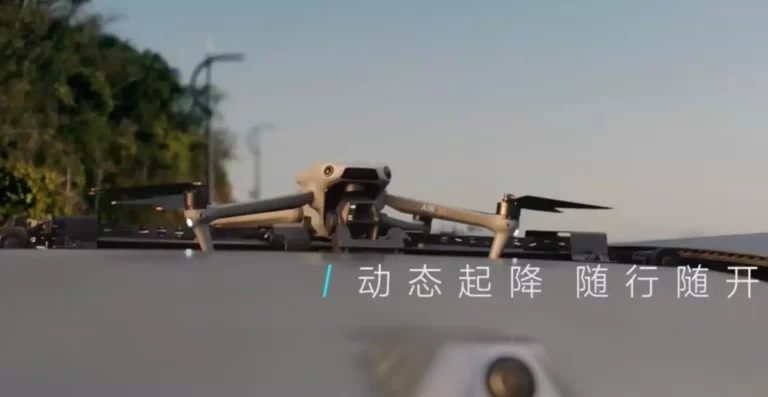
In an era where technology and daily life continue to merge seamlessly, BYD has taken an innovative leap with the introduction of the Lingyuan system. This vehicle-mounted drone-launching compartment, developed in collaboration with the renowned drone manufacturer DJI, is now available across all BYD models. While it currently serves the Chinese market exclusively, this system represents a bold step in integrating aerial technology with automotive convenience, opening new avenues for both personal and professional applications.
The Lingyuan compartment allows drivers to deploy a drone from their vehicle with minimal effort. Simply tapping a button on the vehicle’s touchscreen initiates the process, causing doors to slide open and revealing a compact landing platform. The drone is then launched, capable of capturing footage and data in real-time, enhancing the driving experience. Remarkably, the drone can launch even while the vehicle is in motion, with capabilities to follow the car at speeds of up to 54 kilometers per hour, showcasing a blend of automotive and aerial mechanics rarely seen before.
A key feature of the Lingyuan system is its ability to operate autonomously within a two-kilometer radius of the vehicle, returning safely after completing its designated tasks. As the drone docks at its launch compartment, it recharges, ensuring it’s always ready for the next deployment. With a purchase price of about 16,000 yuan ($2,197), the system includes not only the roof-mounted compartment but also a DJI drone—potentially the DJI Air 3S—along with related applications for managing the drone’s operation.
The potential applications of the Lingyuan system are expansive. For personal use, drivers can capture scenic drives or document adventures from a unique aerial perspective, transforming mundane trips into extraordinary experiences. Professionals, particularly those in photography and videography, could leverage this technology for on-the-fly shoots or inspections in hard-to-reach areas.
Moreover, existing apps that accompany the system hint at broader uses. These include video editing tools and AI recognition software designed to enhance user interactivity. The AI Posture recognition feature mentioned in BYD’s promotional materials suggests a future where drones could recognize faces or objects, positing exciting possibilities for security, observational tasks, and data collection.
However, how viable and user-friendly these applications will be remains to be fully seen—especially considering the current lack of clarity regarding self-installation of the system.
By unveiling the Lingyuan system, BYD has positioned itself at the forefront of the automotive and drone industries, echoing similar ventures by its luxury brand Yangwang, which has introduced larger drone systems in its vehicles. Nevertheless, Lingyuan may also face competition from DJI’s own Dock 3, a more expensive solution aimed at industrial uses such as power line inspections.
Despite the potentially higher costs associated with the Dock 3, BYD’s clever pricing strategy for the Lingyuan may appeal to a broader consumer base, especially everyday users who wish to integrate drone technology into their routine without the burden of exorbitant expenses.
The Lingyuan system is a remarkable instance of technology convergence, highlighting how automotive and drone technology can enhance one another. As BYD continues to innovate in this space, the Lingyuan solution could set a precedent for future developments across both industries.
Nevertheless, while the initial excitement surrounding the Lingyuan system is palpable, its long-term success will hinge on factors such as real-world performance, user acceptance, and the potential for modifications based on customer feedback. As technology rapidly evolves, BYD’s Lingyuan might just be the tip of the iceberg in what could become a new standard for vehicles across the globe, paving the way for an integrated future where personal mobility and aerial freedom coexist harmoniously.

- BYD’s Lingyuan: A New Era of Vehicle-Integrated Drone Technology - June 23, 2025
- The Rise of Xiaomi: An Overview of the Company’s Latest Innovations - June 23, 2025
- Ikea Enters the Thread Realm: The Timmerflotte Sensor - June 23, 2025
Leave a Reply