
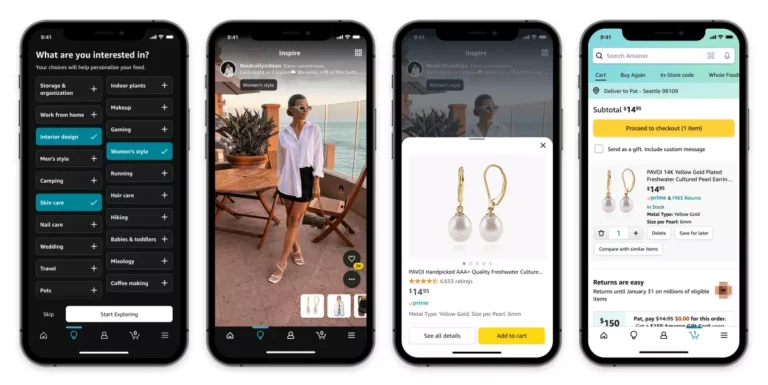
Amazon has recently decided to discontinue its short-form video and photo feed, known as “Inspire,” which was integrated within its mobile application. Launched in 2022 as part of the company’s strategy to engage in the burgeoning world of social commerce, Inspire aimed to provide a platform for discovering products through user-generated content influenced by both brands and fellow consumers. This decision to terminate the feature reflects an important pivot in Amazon’s evolving social commerce strategy, one that raises questions about its future direction and the competitive landscape.
Analyzing Inspire’s Role in the Social Commerce Sphere

Inspire entered the market at a time when short-form content, popularized by platforms like TikTok, was gaining significant traction among consumers looking for bite-sized product reviews and recommendations. The allure of TikTok, especially with its vast audience and influencer-driven content, posed a considerable challenge to Amazon’s aspirations. Although the Inspire platform intended to capitalize on this trend, it struggled to gain substantial traction among creators, many of whom preferred more lucrative options available on competing platforms. Ultimately, the initiative couldn’t carve out its niche in a crowded market.
The shutdown of Inspire comes as Amazon shifts focus toward strengthening partnerships with established social media platforms. In late 2023, Amazon collaborated with Instagram and Snapchat to facilitate direct shopping experiences through these apps. This strategic move not only positions Amazon alongside social media giants but also provides a streamlined shopping experience that leverages the influence of established social commerce channels, thus diminishing the need for an internal feature like Inspire.

A critical aspect of Inspire’s decline can be traced back to its approach to creator compensation. In a bid to attract influencers, Amazon offered a payment structure that many found inadequate, offering $12,500 for up to 500 videos, translating to a mere $25 per qualifying contribution. This model faced backlash from creators who deemed it insufficient compared to what they could earn on rival platforms like TikTok and Instagram. The struggle to incentivize creators to engage with Inspire ultimately contributed to the lack of vibrant content necessary for a thriving platform.
While Amazon’s spokesperson declined to elaborate on all aspects surrounding Inspire’s closure, they emphasized the company’s ongoing commitment to enhancing shopping experiences through alternative avenues. This includes utilizing curated collections and creator storefronts, as well as new artificial intelligence features, like the shopping assistant, Rufus, designed to inspire consumer decision-making.
As Amazon navigates the challenging landscape of social commerce, the aspirations of Inspire linger as a lesson in adaptability. The company’s recognition of customer shopping behaviors and preferences demonstrates a willingness to evolve its strategies. The testing of a feature that redirects shoppers to external brand websites when a product is not found on Amazon illustrates further innovation and adaptability, positioning Amazon not just as a marketplace, but as an integral part of the broader shopping ecosystem.
The closure of Inspire underscores a significant moment in the ongoing evolution of social commerce. While Inspire may not have achieved its intended objectives, Amazon’s pivot allows it to thrive in an arena defined by rapid change and user preference. With a focus on strategic partnerships and innovative technology, the company is setting a stage that may lead to more meaningful consumer engagements in the future.

Leave a Reply